Introduce
A breaker in an adjacent room powers a platform and door. The changed state makes its effect visible.
Teach a power-control mechanic through the spaces it changes.
A breaker in an adjacent room powers a platform and door. The changed state makes its effect visible.
Power enables the route while also activating hazards. The player has to use the system and navigate its consequences.
Multiple breakers interact with shared systems in the generator room. Choice and order become part of the problem.
The research-facility setting supports the mechanic: corridors, machinery and a communications objective give power control a consistent purpose throughout the level.
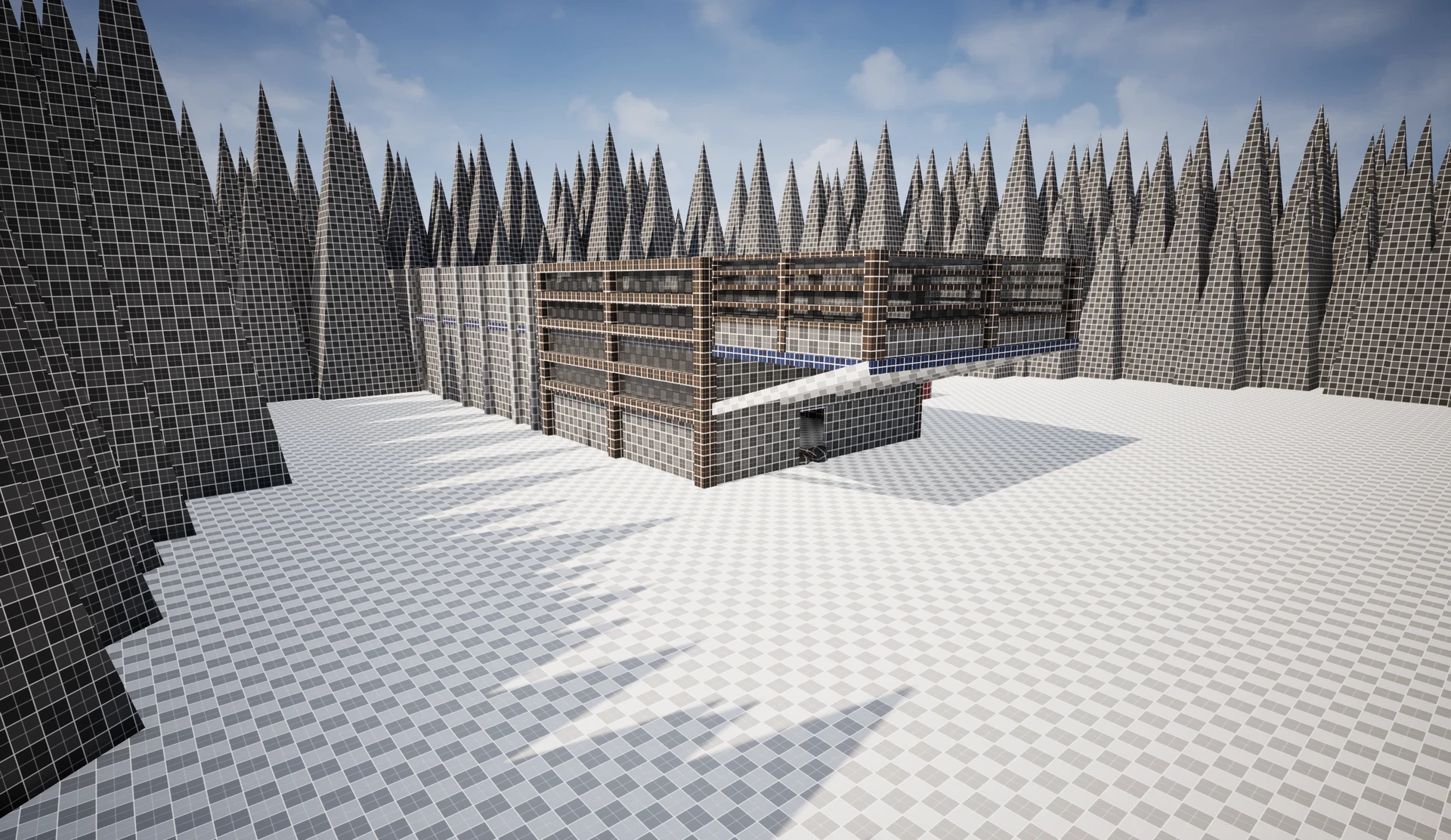
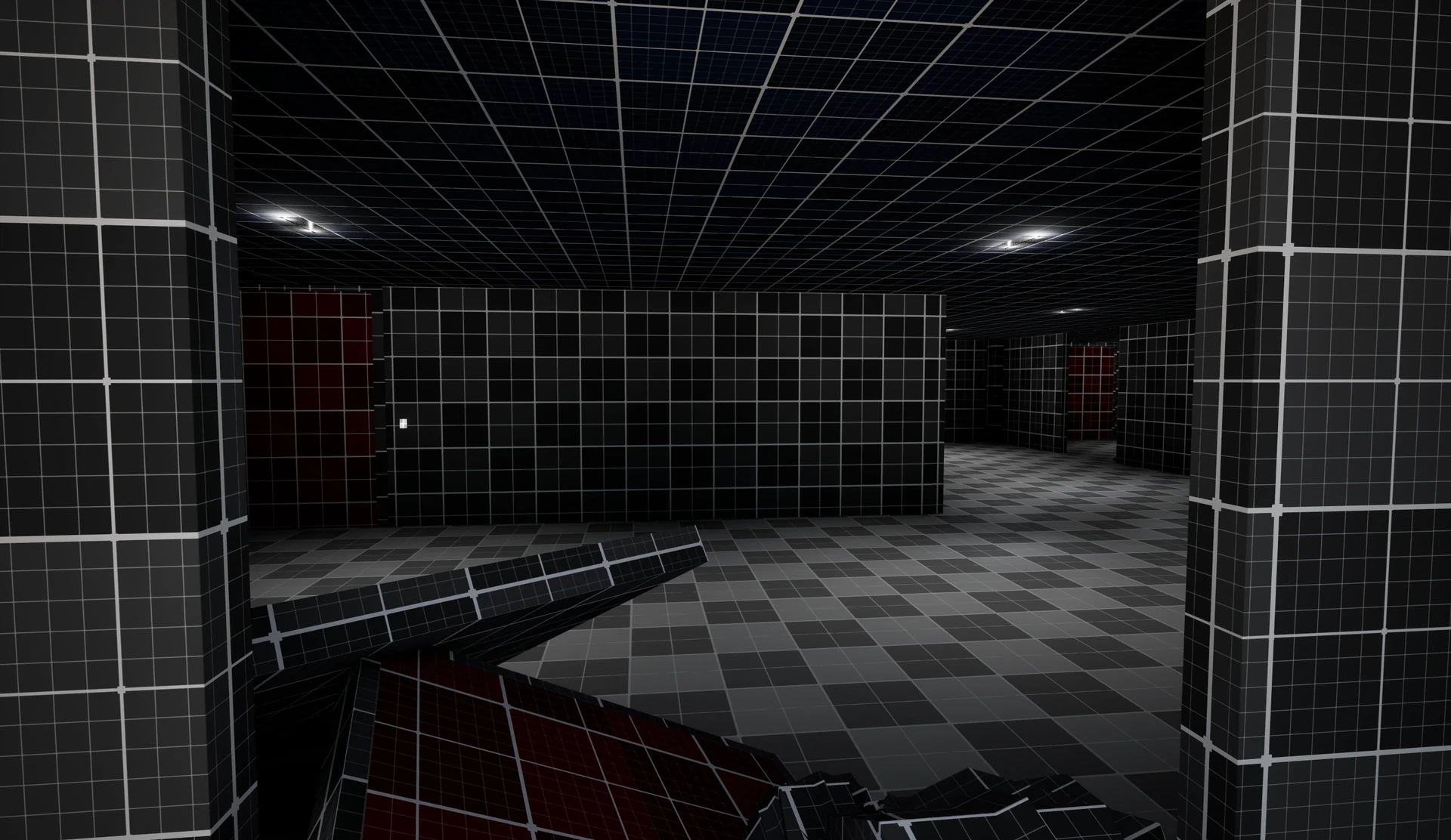
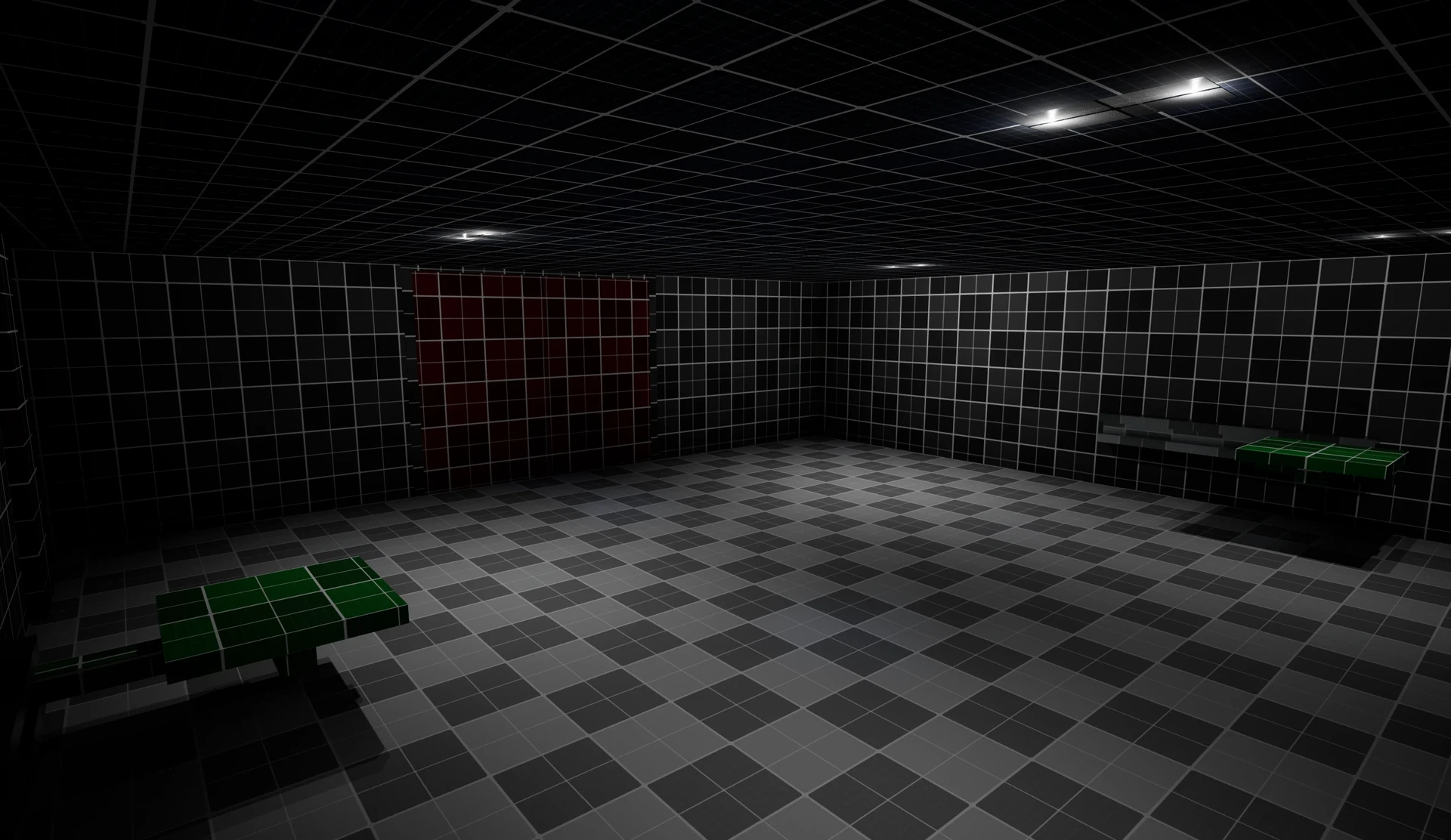
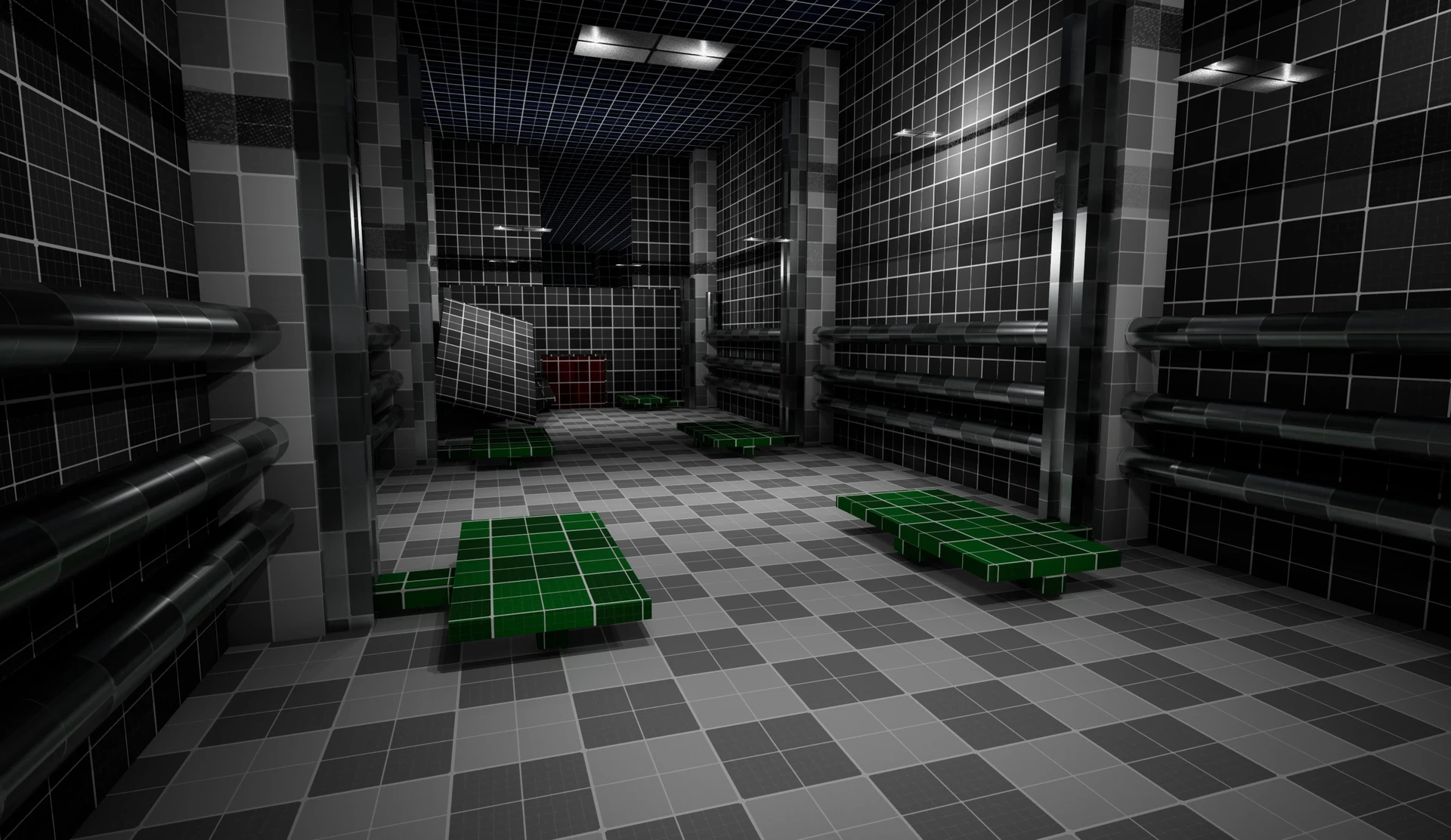
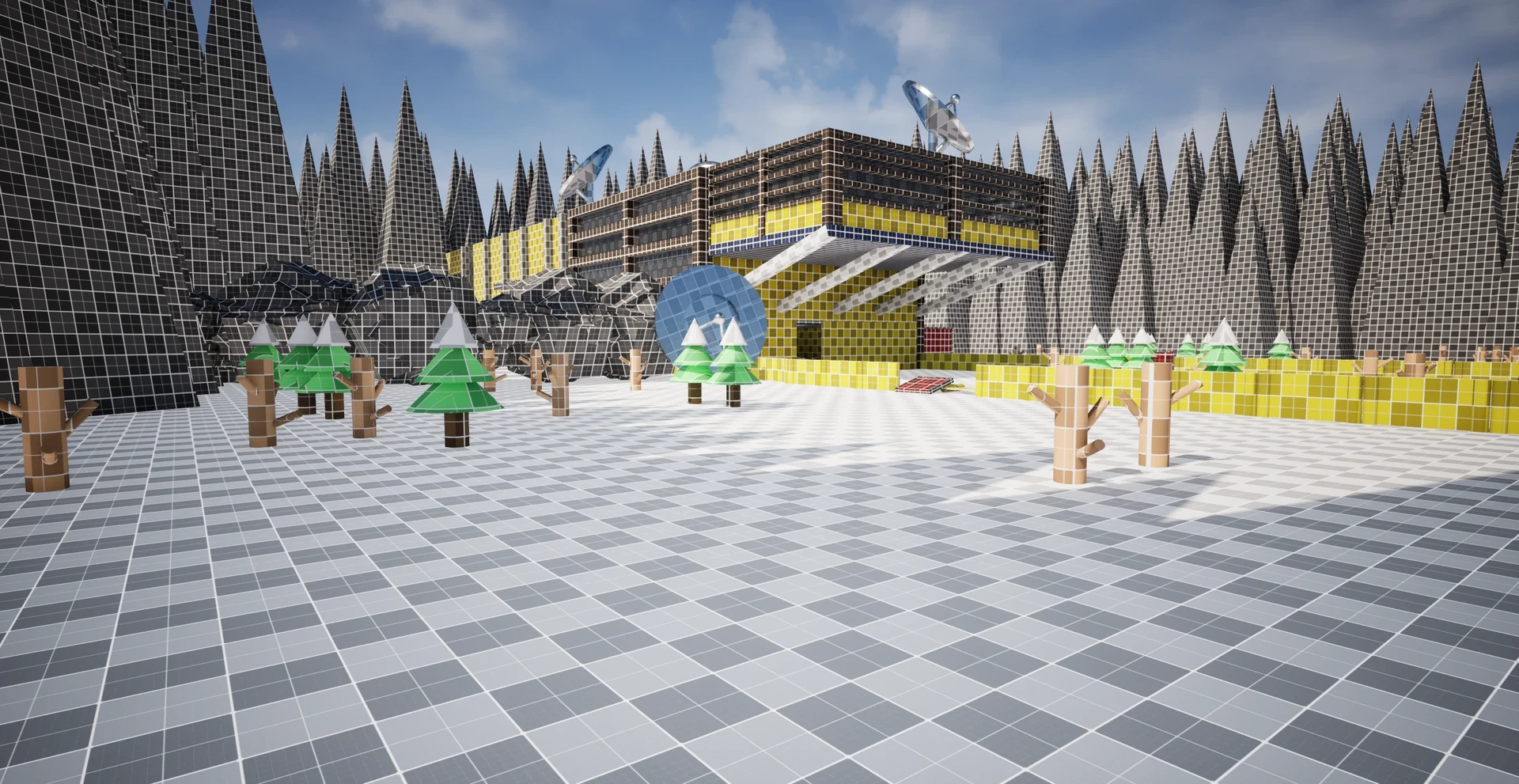
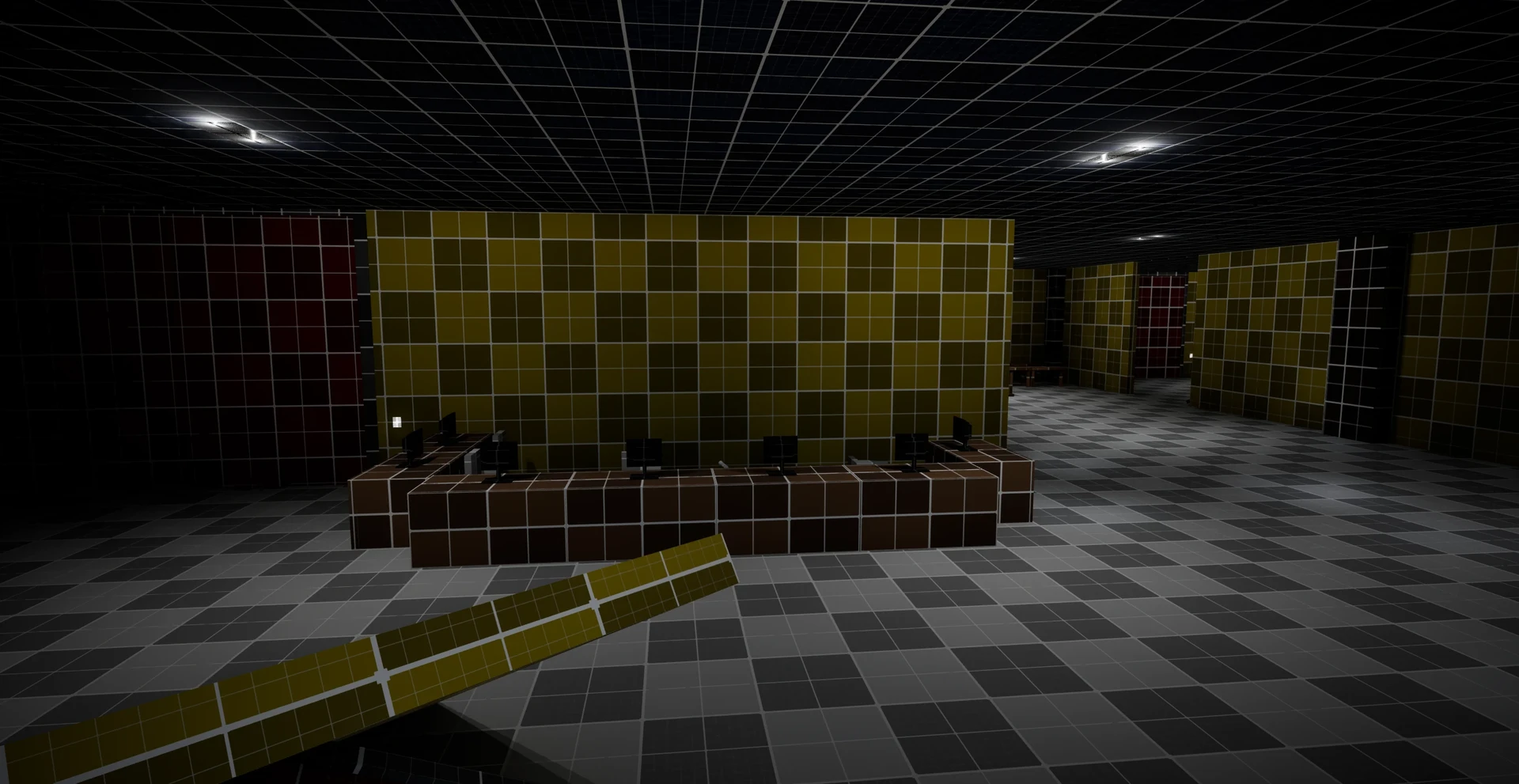
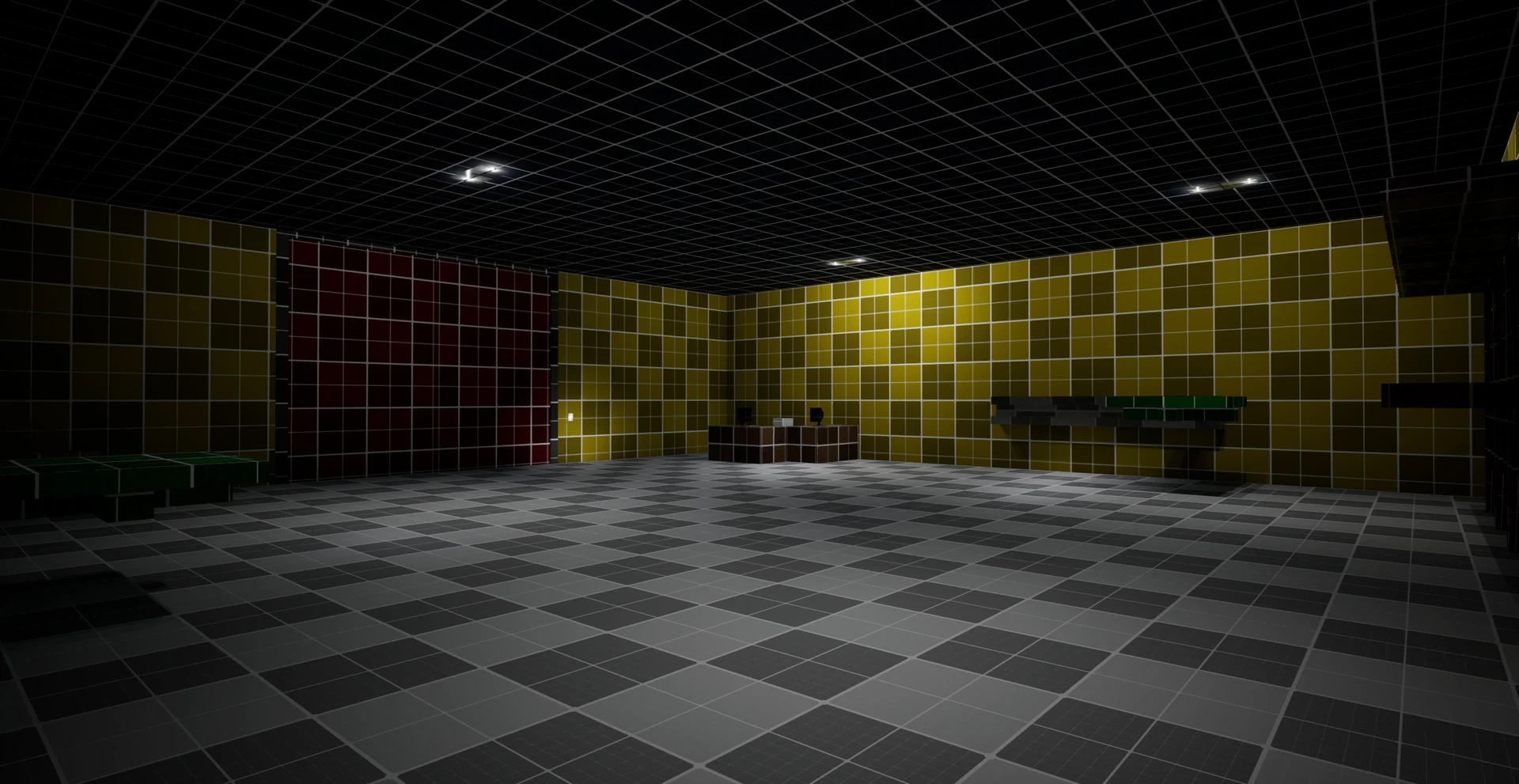
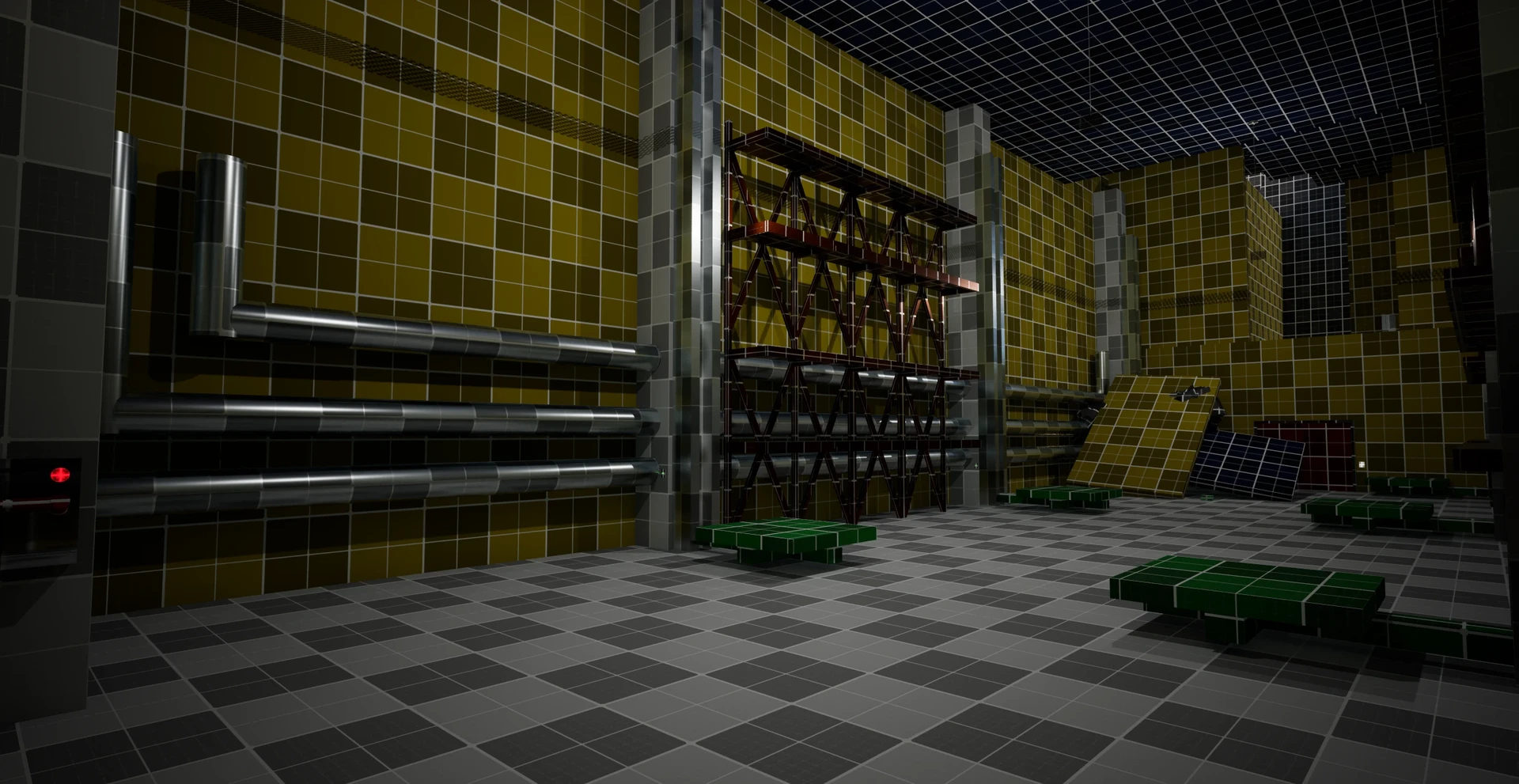
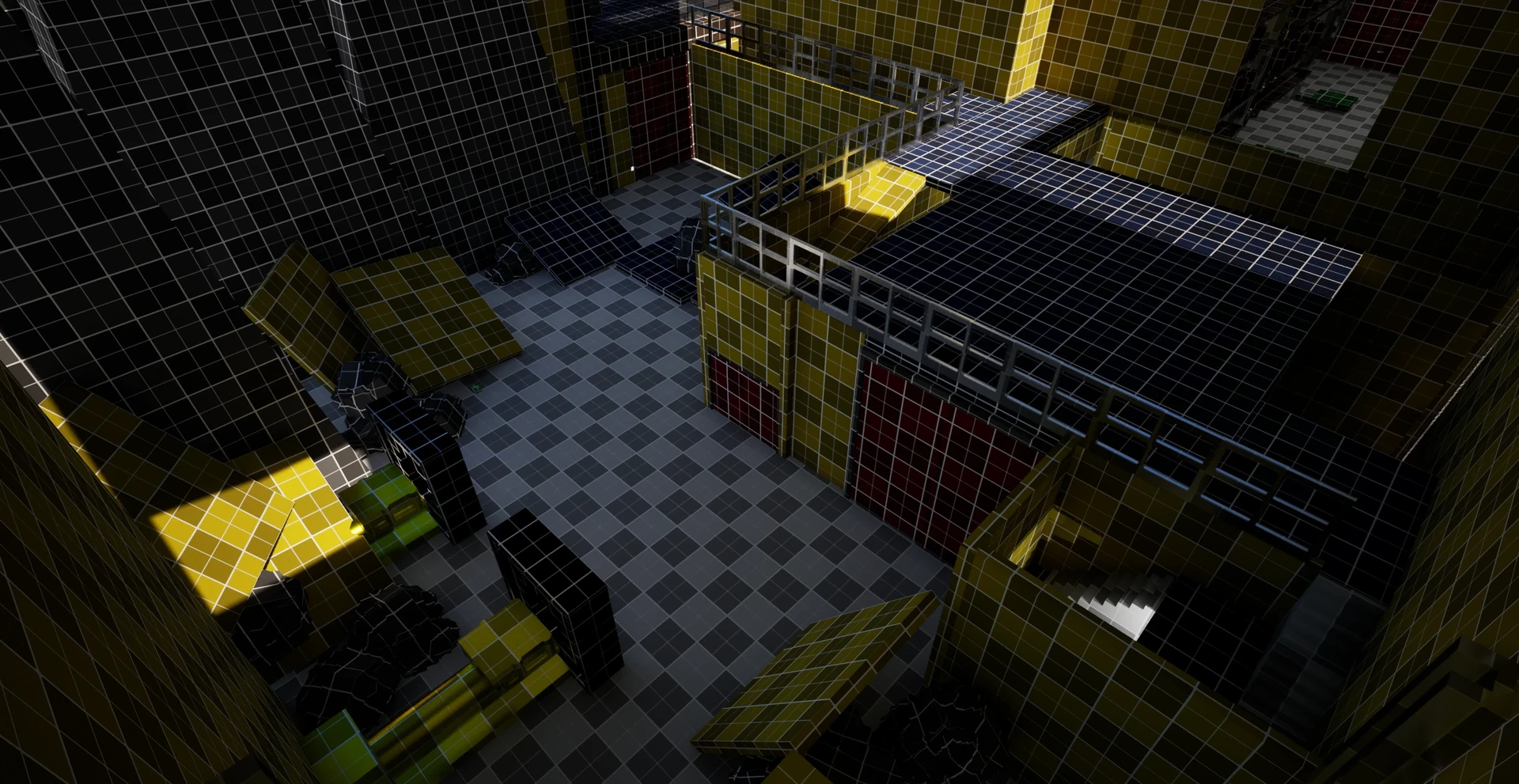
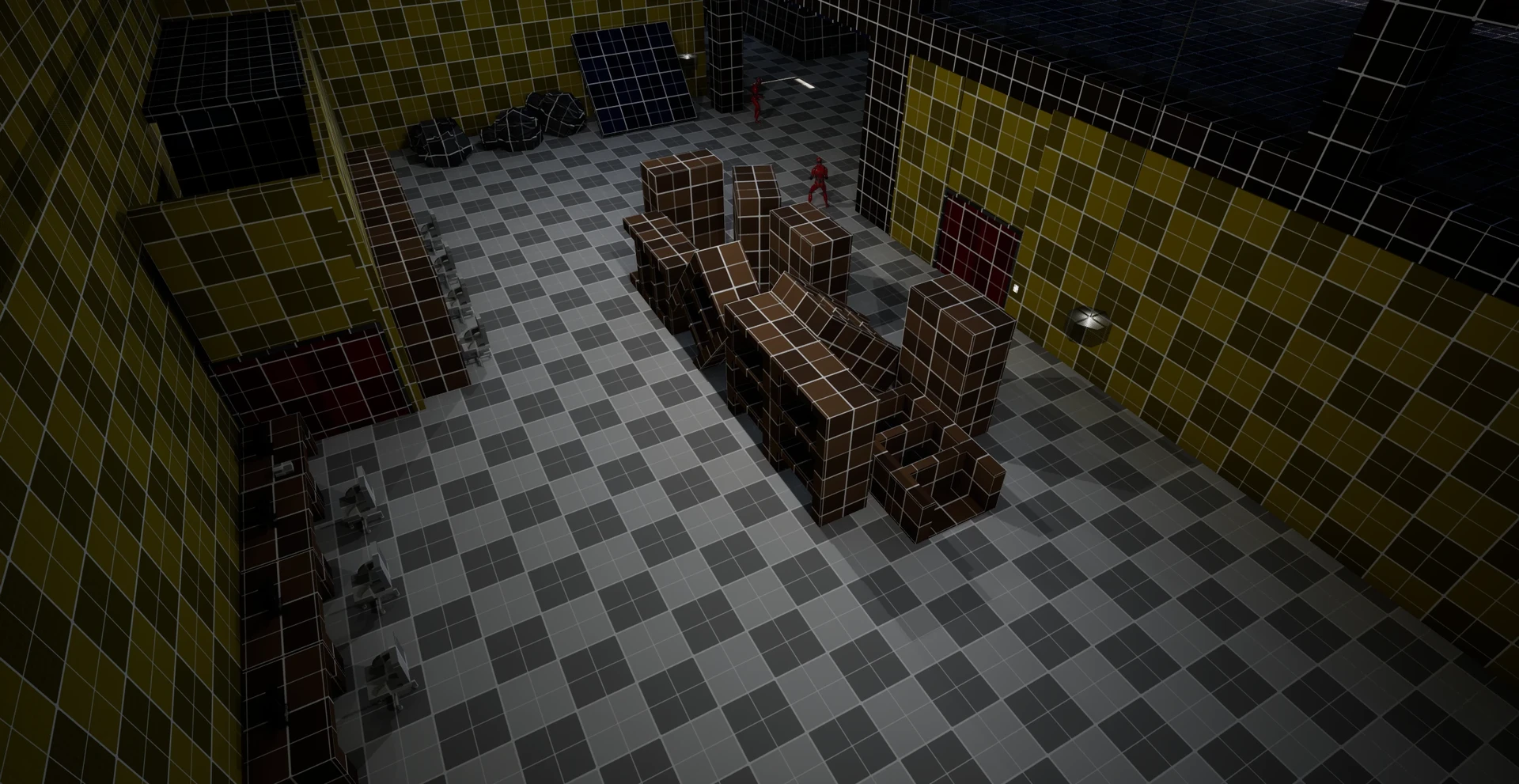
The research, pitch and beat chart gave the level a clear direction. I used the breaker in introduction, practice and mastery sequences, escalating it from opening a route to managing hazards and interacting power states.
I would map the layout and existing framework capabilities earlier, then reserve time for exploration paths. The critical route was completed; the optional spaces and visual polish had less development time.
Full Sail University | April 2026 | Unreal Engine 5
Level Design 2 was my second block mesh project, completed in April 2026 using Unreal Engine 5 inside Full Sail University's Scraps Project framework. The project required designing a full level within a strict post-apocalyptic creative vision — minimal combat, minimal living things, grounded and believable world. The assignment introduced a production pipeline that included PureRef research, Perforce version control, a pitch deck, and a beat chart to plan and communicate the level before building it. The level I designed is an arctic abandoned research facility that a player character called the Scrapper is sent to infiltrate and retrieve a communications device for the Bastion. The central mechanic I designed is a breaker system — a power switch that activates and deactivates doors, moving platforms, lights, and hazards throughout the facility. The mechanic was taught to the player across three IPM sequences — Introduction, Practice, and Mastery — embedded within six total action blocks that structured the full level experience.
The logic for the breaker and all of its sub-mechanics came together smoothly, largely because the Scraps Project already had relevant systems built in that I could access through references and child blueprints. That foundation gave me the time to focus on expanding the mechanic — building out doors, platforms, lights, and hazards that all respond to the breaker state. The audio and visual feedback across all of these systems is clear and intentional. Players always knew what was happening, what caused it, and what to do next.
The pre-production work was the backbone of the entire project. The PureRef research established the setting and atmosphere clearly enough that every design decision during the build had a reference point to go back to. The pitch deck forced me to commit to a vision before touching the editor, and the beat chart gave the level a structure to build toward rather than designing on the fly. On a project of this scale, having that foundation kept me grounded every time I hit a wall on layout or placement decisions.
The three IPM sequences taught the mechanic effectively. Every playtester who ran the build understood what the breaker did and how to use it without any external explanation. Before the introduction IPM the player encounters a base mechanic already functioning with power — a working
door — so they understand what these mechanics look like when operational. The introduction IPM then puts them in a dark room where the door is non-functional and the platforms are not moving. The breaker is visible with its lever and red indicator light. Activating it turns the lights on, starts the platforms moving, and makes the door functional and interactable. The practice IPM introduces the breaker as both a solution and an obstacle simultaneously — activating it enables the path forward but also activates hazards the player must now get through. The mastery sequence shows how multiple breakers interacting with the same systems can change the outcome depending on which one is activated and when.
The single combat section was placed in the communications wing — the most populated area of the facility and the most logical location for zombies in the setting. The design gives the player significant affordance before the encounter begins. The zombies are audible before the door opens. One zombie is visible from outside the room before the player enters — it is stationary and will not engage unless the player initiates — giving both an audible and visual warning that combat is ahead. The two that can detect the player follow patrol paths that allow stealth if the player's timing is precise, but the window is tight. The key objective is in this room, the intensity is high, and the design earns that intensity through setup rather than just throwing enemies at the player.
This block mesh is a significant step forward from Level Design 1 in terms of making the space feel believable and inhabited. Desks, computers, tables, chairs, barrels, shelves, trees, windows, rails, generators, doors, lights, and fencing all contributed to making the research facility feel like a place that existed before the player arrived. The lessons from Level Design 1 — color theory, shape language, player affordance, leading lines — were all applied here with more confidence and intention.
The flame hazard visual built with the Niagara system did not reach an acceptable quality level. It communicated the hazard but not convincingly. Niagara is a system I want to invest real time in learning properly — the results it is capable of are well beyond what I produced here — but during a block mesh with this much content to design, spending that time on one visual effect was not the right call. The result reflects that tradeoff.
The critical path was completed but nothing beyond it. The plan included exploration paths, hidden areas, and easter eggs to reward players who went off the main route. None of that made it into the build. The scale of the level combined with the time issues described below consumed everything that was available, and the exploration content was the first thing cut.
The Scraps Project included tutorial videos and pre-built systems that covered a significant portion of what I ended up building from scratch. Volume toggle logic, certain mechanic functions, and other systems were already there waiting to be configured rather than coded. I built them manually, found the videos mid-process, and then had to go back and refactor the work. The time spent on that rework came directly out of level building time.
Figuring out how to implement the breaker in new and interesting ways while staying within the post-apocalyptic creative vision and meeting the rubric requirements was genuinely difficult. Designing puzzles that felt fresh across six action blocks without repeating the same interaction stretched the creative process and consumed more time than anticipated at nearly every stage of the layout. It was a valuable exercise but it was a harder problem than I expected going in.
The first pass of the block mesh was not given the same time and attention as the second pass. Entering crunch during the second pass to compensate meant that everything intended to go beyond the critical path — the exploration content, additional detail, more variety in the space — never got built. More time on the first pass and more upfront planning, including schematic drawings of the facility layout rather than designing zones on the fly, would have produced a better level with more content in the available time.
Level Design 2 was the most complex and demanding project I had worked on up to that point. The breaker mechanic worked, the IPMs communicated it clearly, the combat section landed with the intensity it needed, and the world felt more believable than anything I had built before. The recurring theme across what went wrong is inadequate early planning and time allocation that compresses the back end of the project and cuts content that should have been there. The difference is that this time I understand exactly where the time went and what the fix looks like. The next level will have schematics before it has geometry.
Level and mechanic presentation: Cody Flanagan. Built within Full Sail University’s Scraps coursework framework. This April level is a separate project from June’s Team Howlite / Scraps team project.