Two rolls per turn
This restricted movement and made an attack consume the entire turn. I returned to three rolls.
Use a small action budget to create meaningful movement and combat choices.
Two players race to move a piece onto the opponent’s starting row on an 8×20 grid. Each turn provides three die rolls. Rolls can fund movement, while an attack consumes two of the three rolls. A successful defender can take the attacker’s piece or revive a lost piece.
These costs connect several choices: advance one piece or distribute movement, attack or preserve mobility, and capture an opponent or restore your own position. The goal was a clear ruleset with decisions that continue to matter after players learn it.
Early playtests exposed an overly effective rush: advancing one piece could make the rest of the board irrelevant. I expanded the original board and then added an offset row of pieces to create a defensive buffer. Later observations recorded more interaction and an opponent’s opportunity to stop that advance.
This restricted movement and made an attack consume the entire turn. I returned to three rolls.
Cheaper attacks reopened the rush strategy. I retained the two-roll cost.
The experiment was enjoyable but appeared too powerful in the observed tests, so it did not become a permanent rule.
Peer feedback exposed ambiguity in movement costs, roll spending and setup. I revised those explanations and the piece and board descriptions.
The observations came from a small coursework playtest group. They guided iteration; they do not establish a statistically balanced game. The journal also records occasional playtimes above the target.
I recorded attacks, defense choices, movement and individual rolls, alongside the players’ comments. This let the next revision respond to how the game was actually being played.
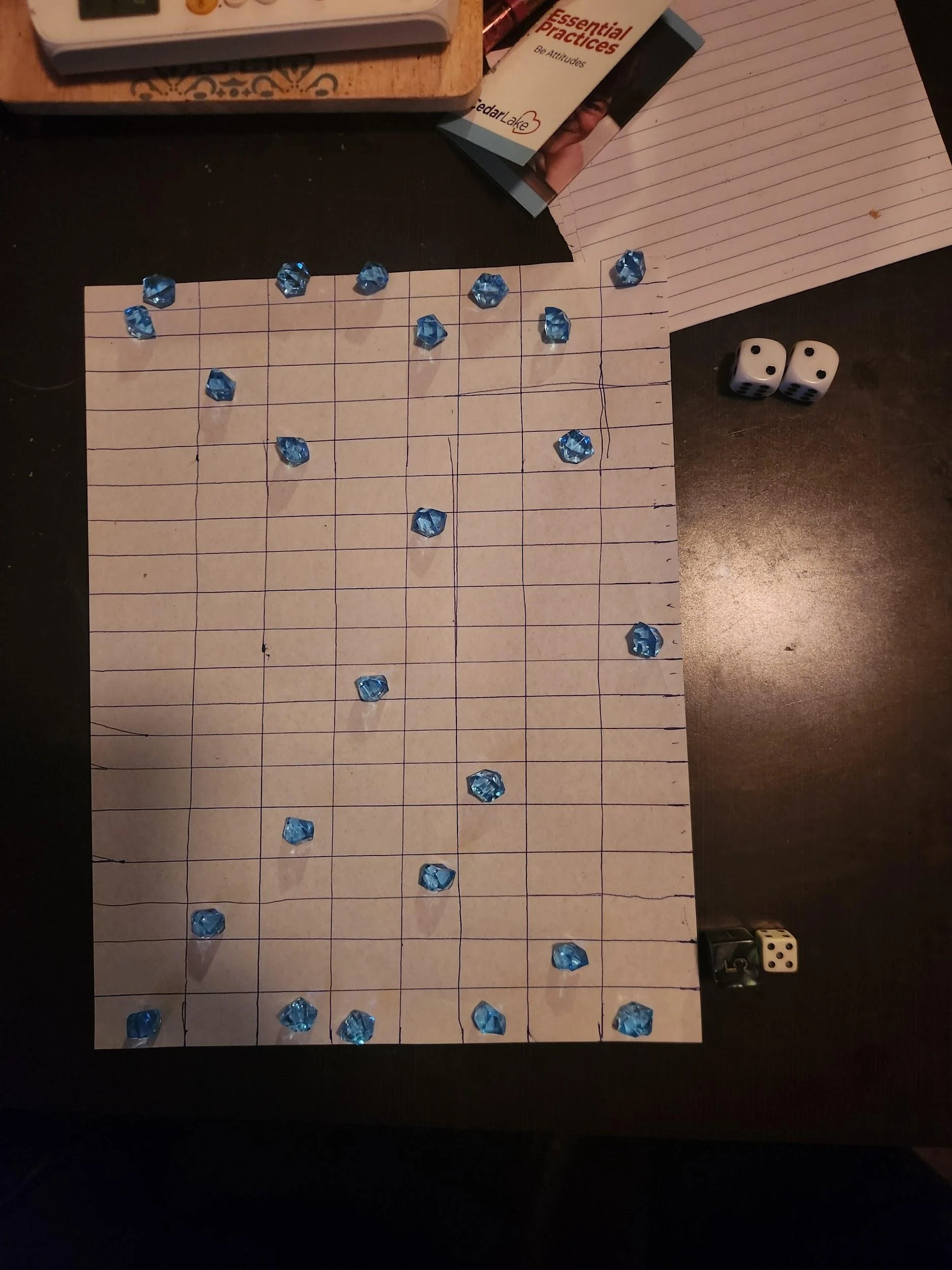
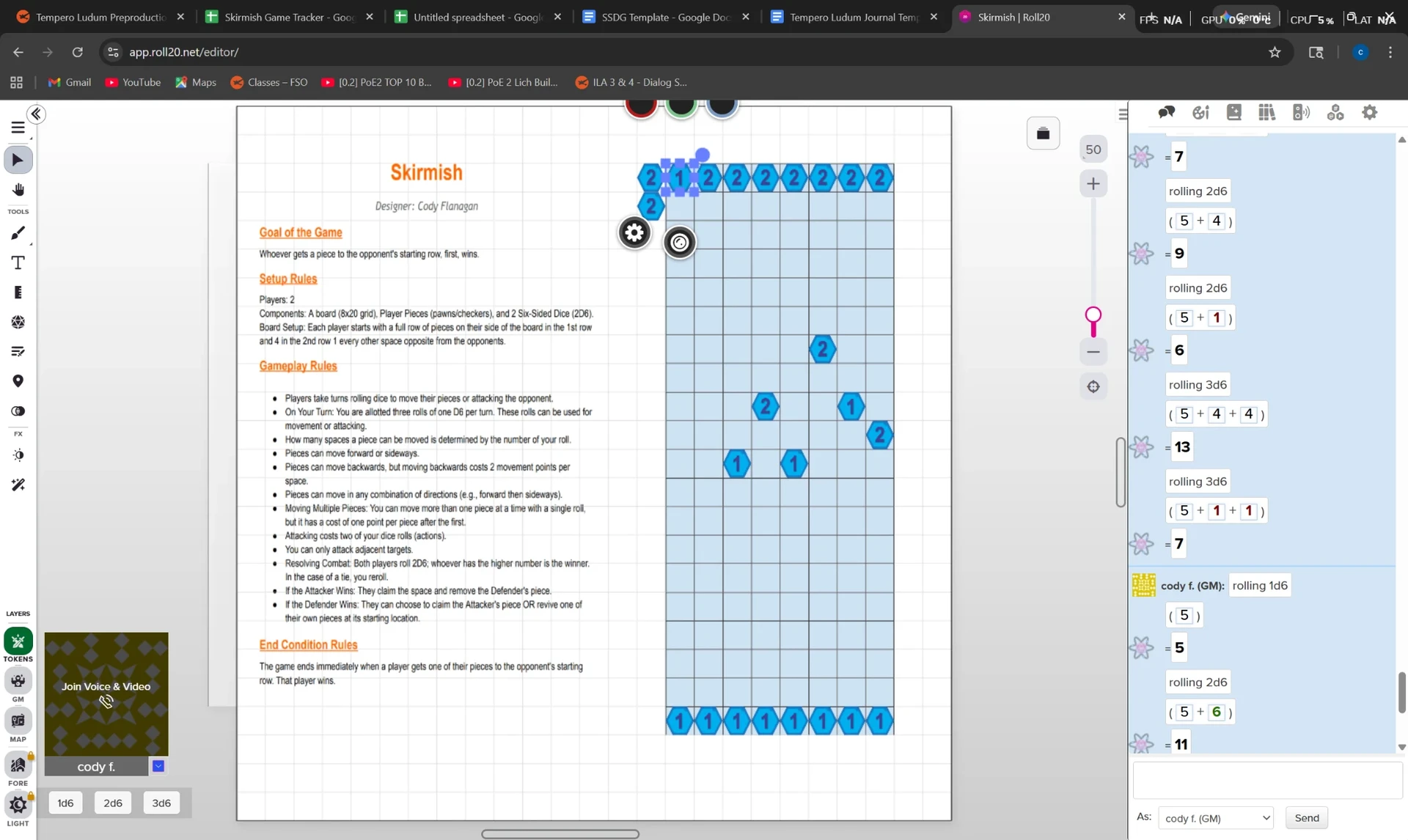
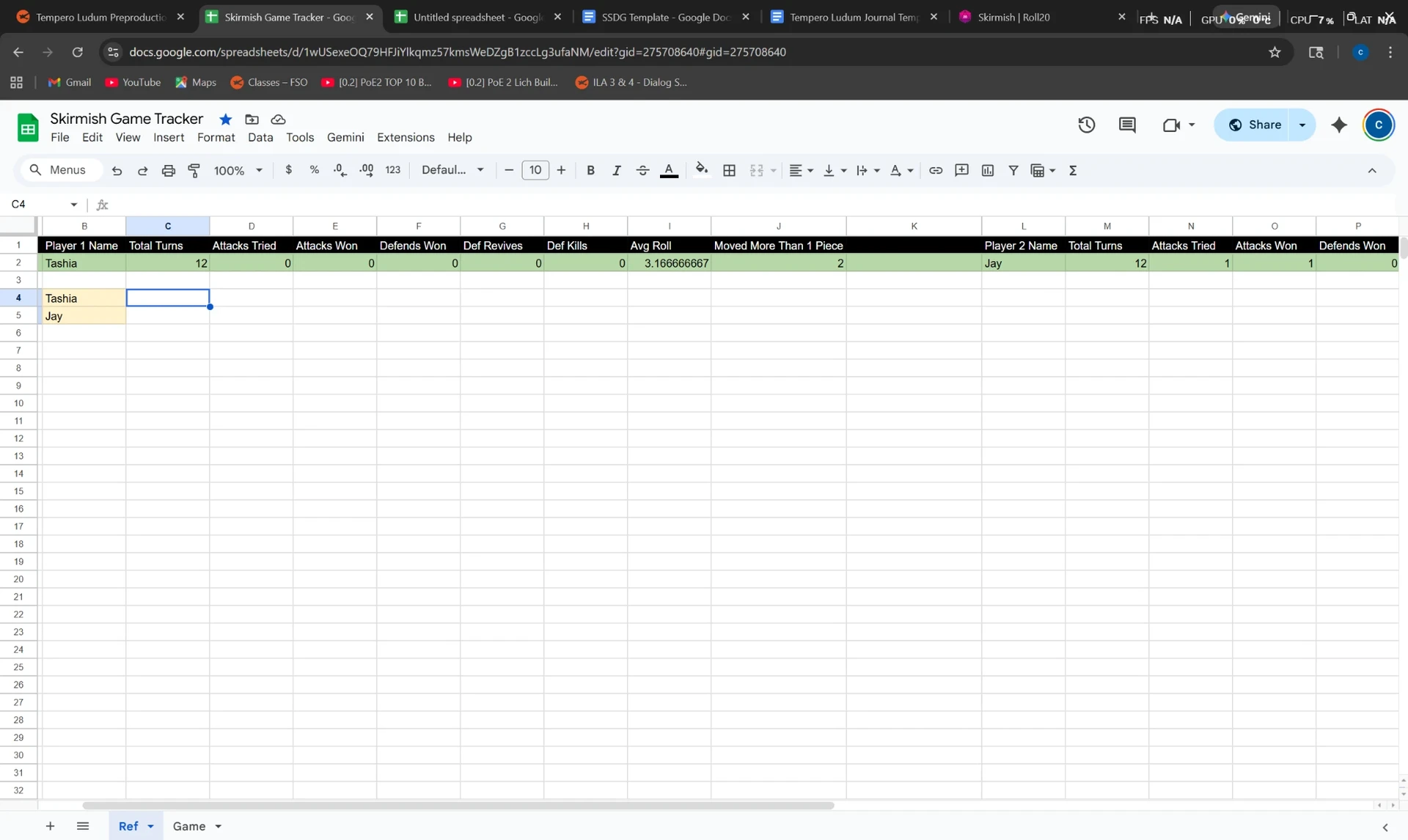
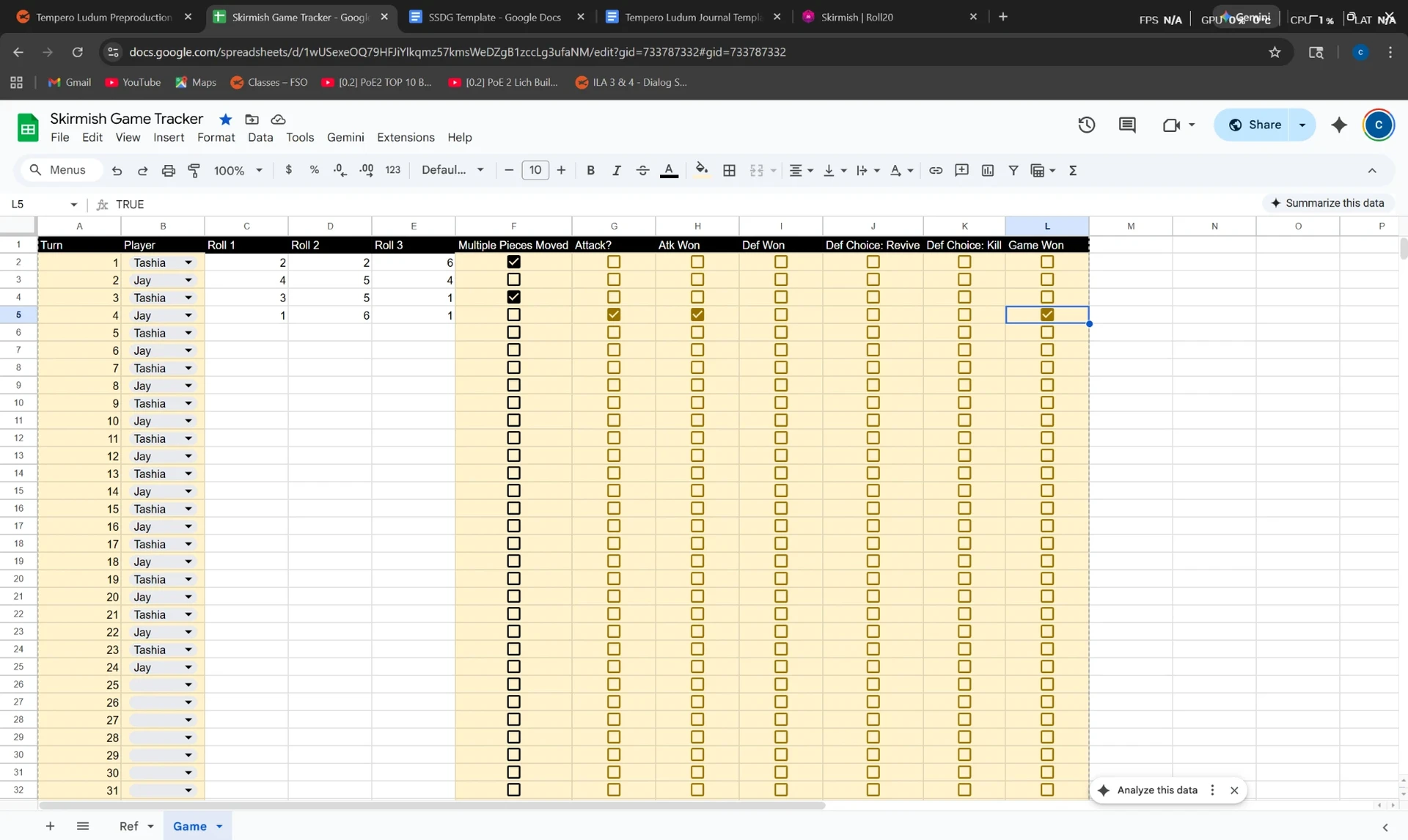
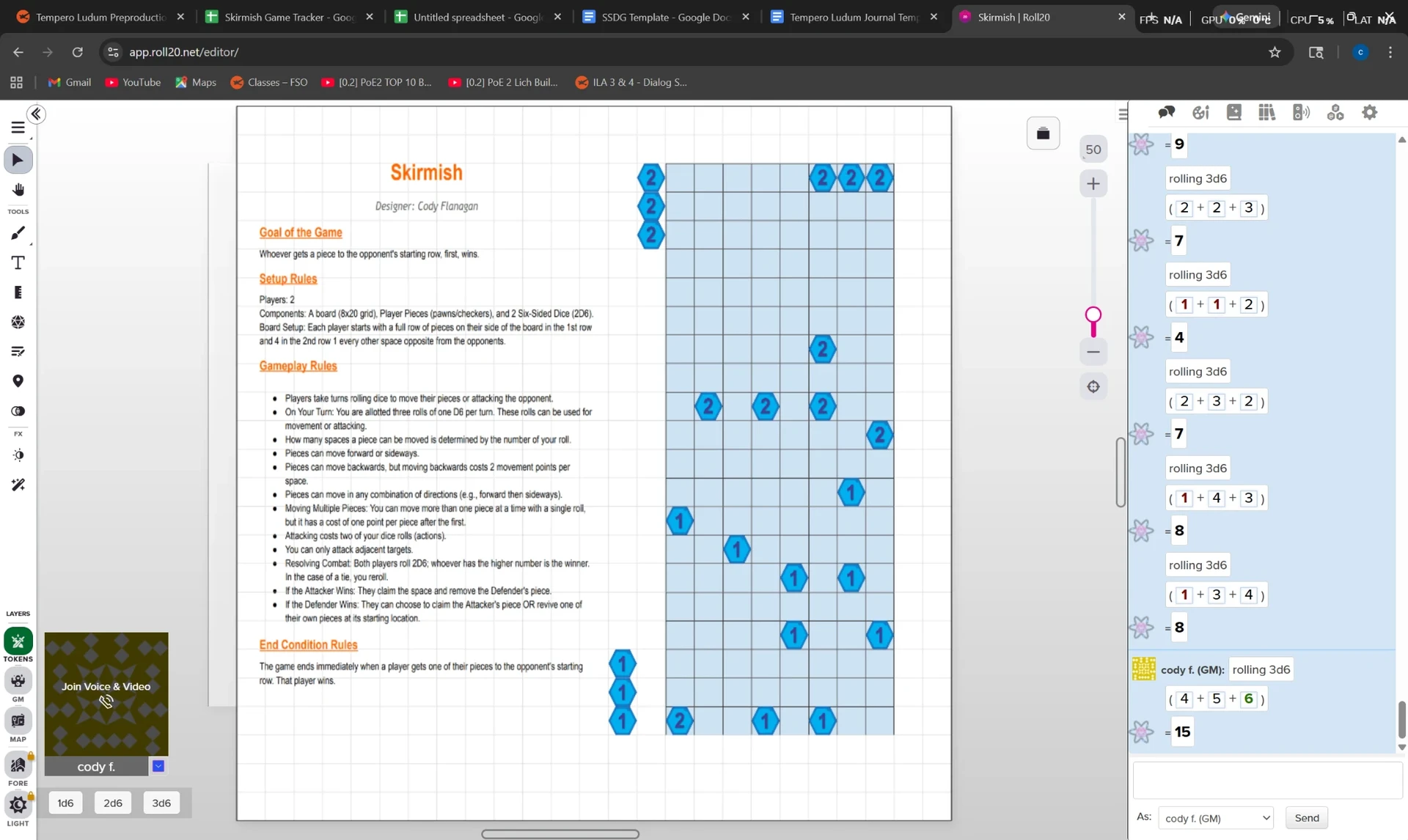
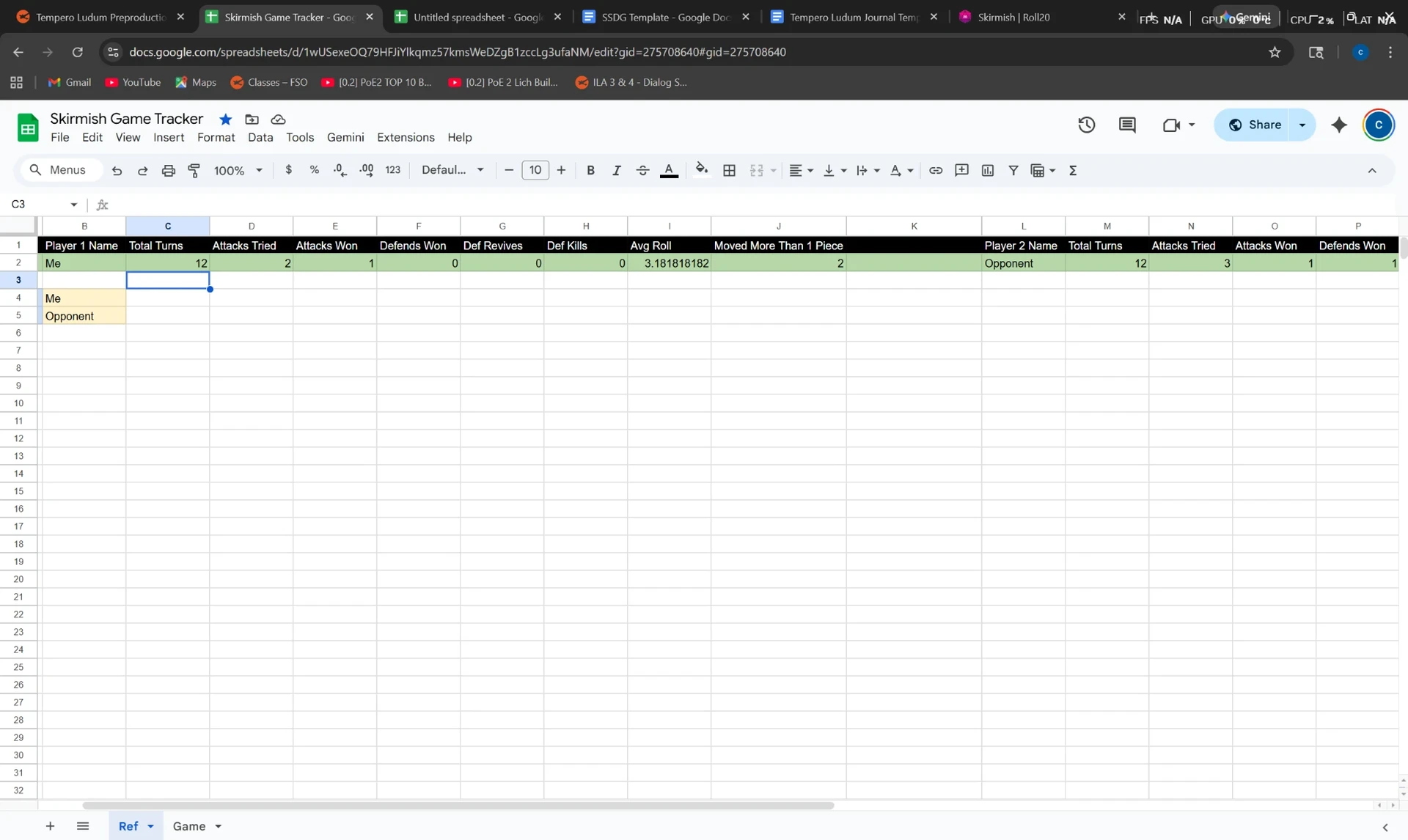
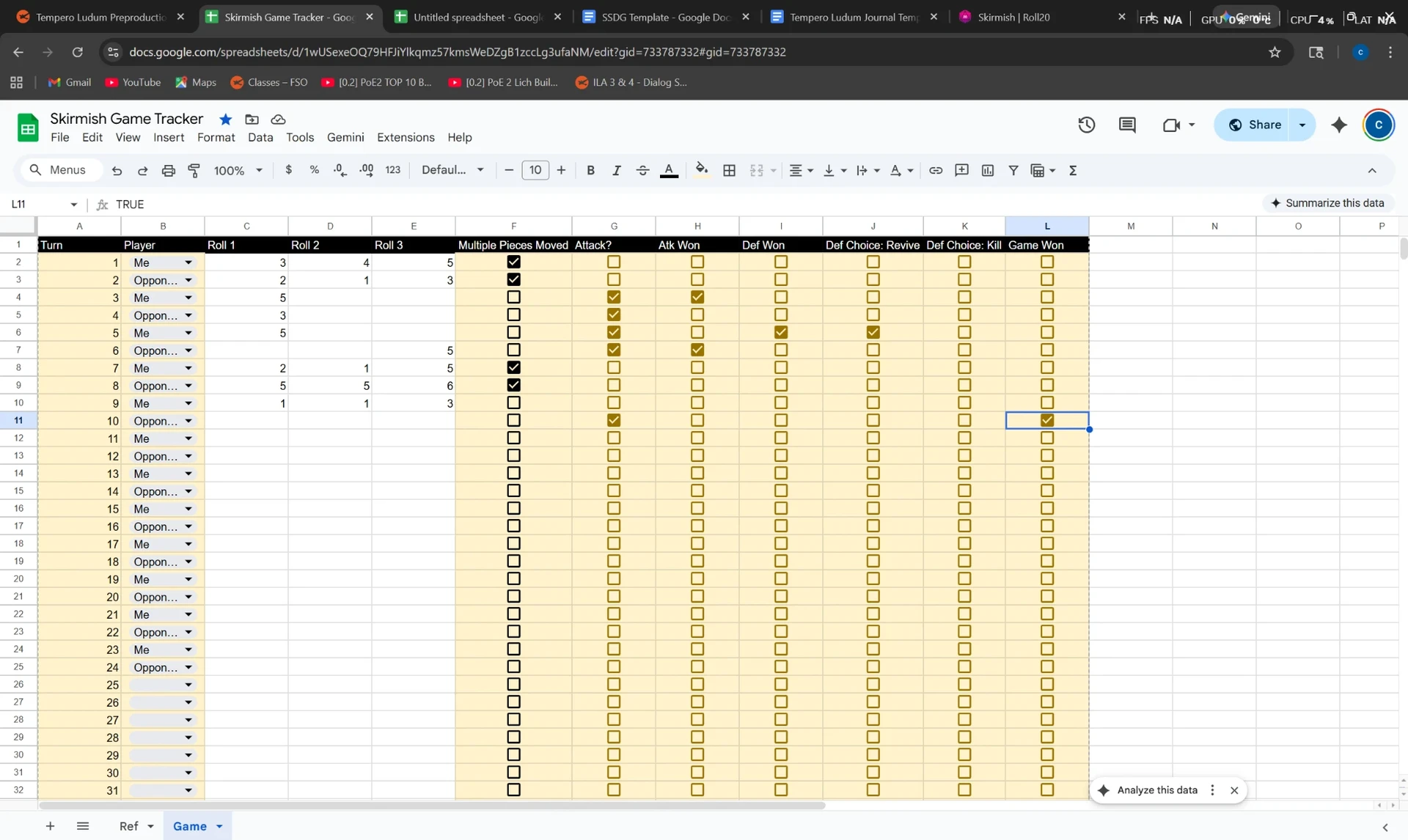
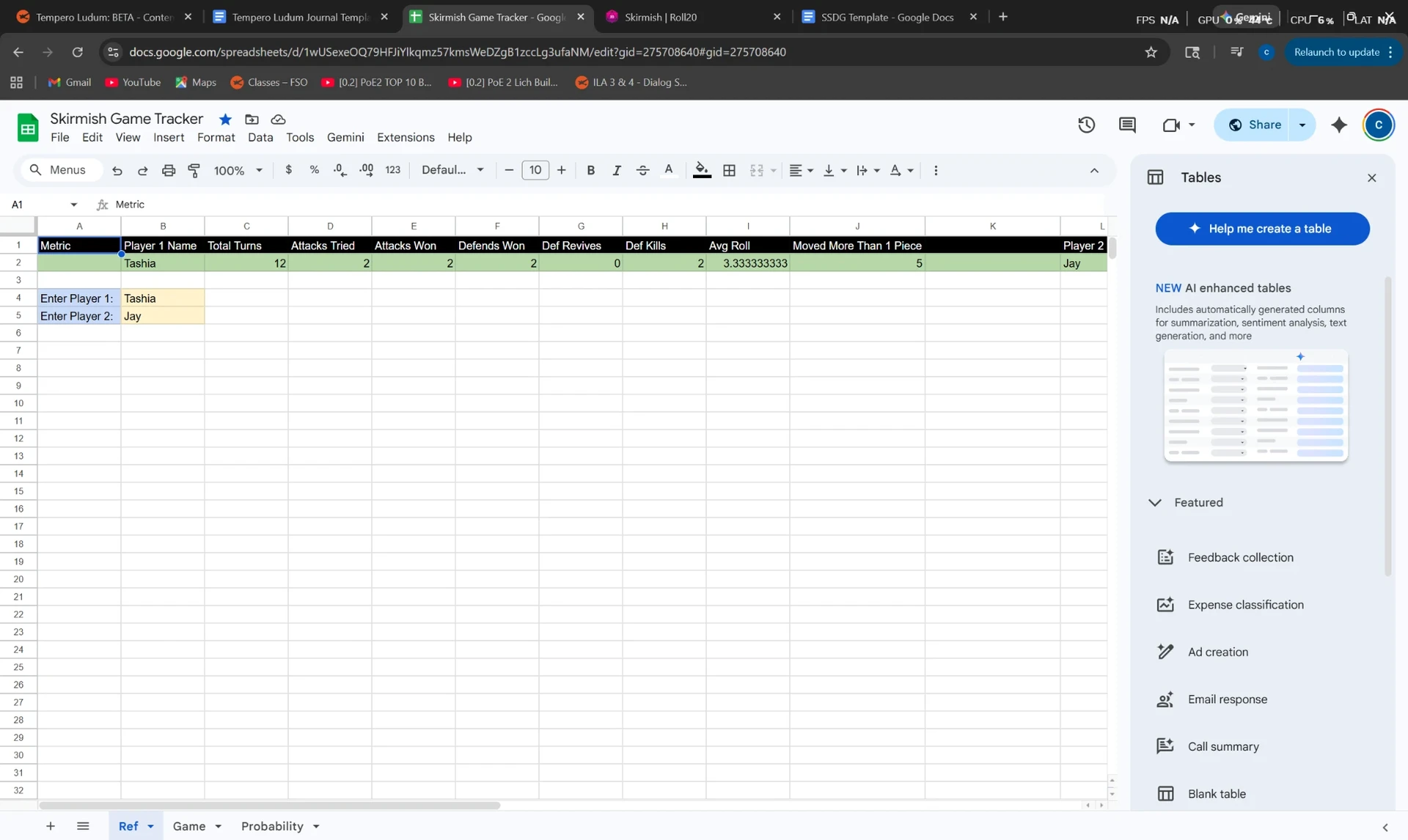
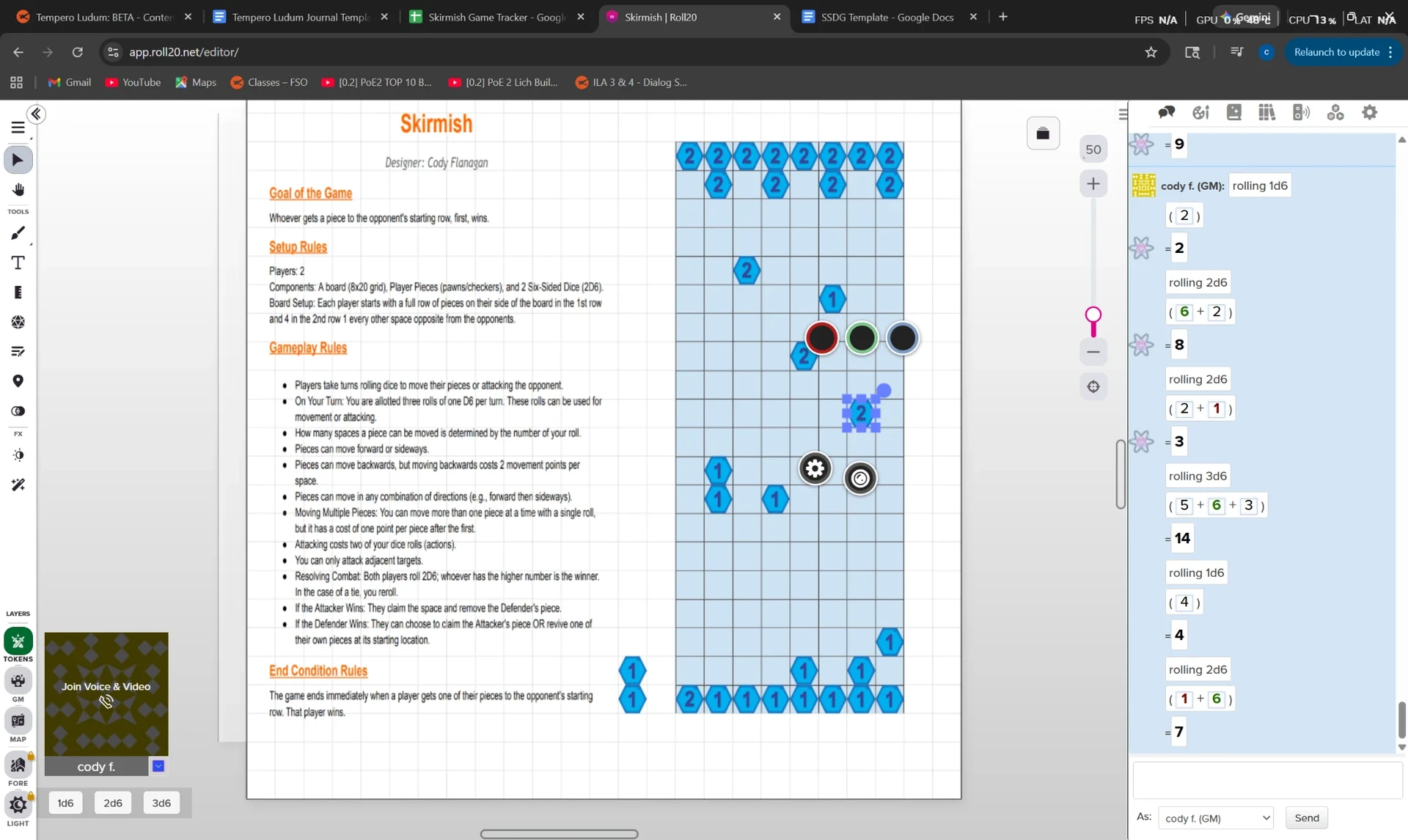
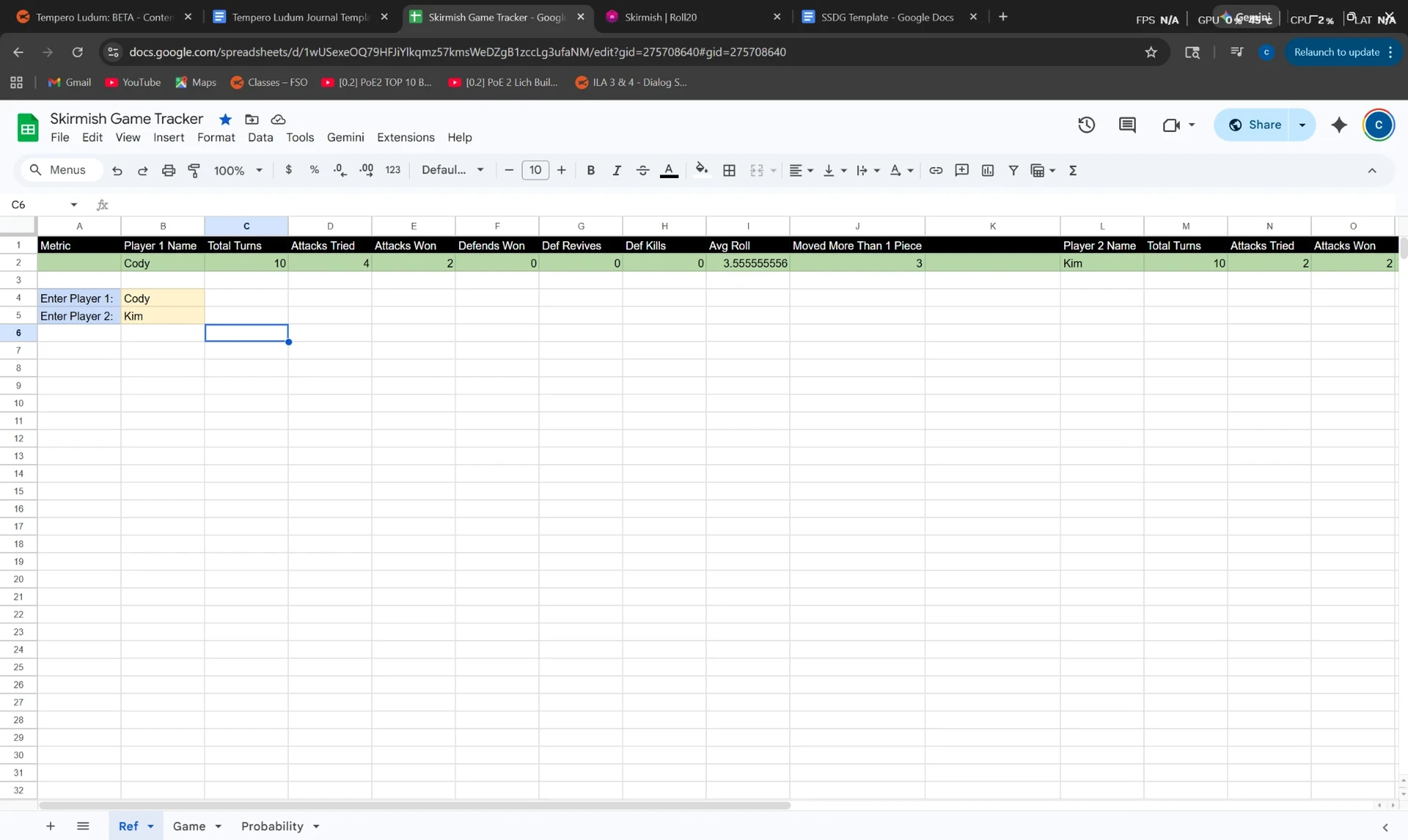
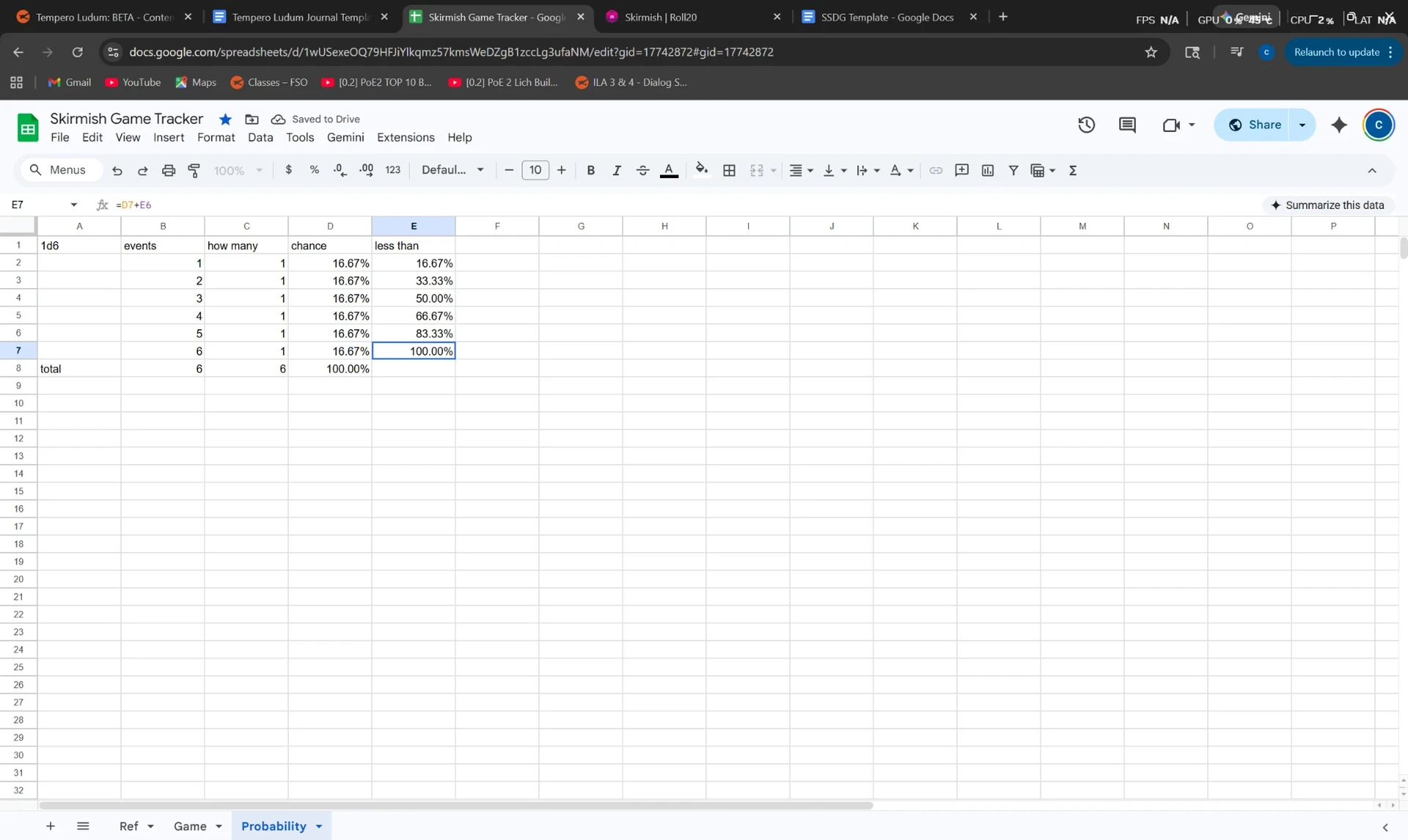
Recorded playtests exposed a rush strategy. Adding a staggered row of pieces created more opportunities to contest it while preserving the movement and combat choices.
I would test extreme strategies earlier and use clearer examples in the one-page rules. Match length still varied with play style, so pacing remained a specific question for another iteration.
The original reflection is preserved below. Its 50% figure for moving more than one piece should be 4/6, or about 66.7%, under the recorded rule allowing this on a roll of 3 or higher. The small coursework playtests support the reported observations, rather than a general claim that the game is fully balanced.
Full Sail University | February 2026 | Systems Design
Tempero Ludum was a month-long board game design project completed in February 2026 as part of the Systems Design course at Full Sail University. The assignment required designing an original two-player board game from scratch under strict constraints — a single printed page for rules, a single printed page for the board, only up to two six-sided dice for randomization, no cards or specialty components, and a design that favored skill over luck with a target playtime under thirty minutes. The game I designed is called Skirmish. It is played on an 8x20 grid where two players each control sixteen pieces spread across three starting rows. Players receive three dice rolls per turn which they can spend on movement or combat. The goal is simple — get one piece to the opponent's starting row first. The project followed a structured weekly iteration cycle across four weeks, with required playtesting, data tracking, probability analysis, and peer review at each stage.
The fundamental design of Skirmish — three rolls per turn spent on movement or combat, with movement points scaling to the die value — produced a game that was immediately intuitive and fun. Playtesters from week one grasped the rules without difficulty and responded positively to the strategic depth and player agency the system created. The combat system in particular was highlighted as engaging, and the defender's choice mechanic — capturing the attacker's piece or reviving a lost ally — added meaningful decision-making to every combat interaction.
Each week's playtesting identified a concrete problem and each week's revision addressed it. The blitz exploit identified in week two was neutralized by week three through the addition of a staggered third row of pieces that created board friction and prevented a single piece from racing uncontested to the end zone. By week four the game was well-received by all playtesters and the exploit, while theoretically executable, now required deliberate misplay from the opponent to succeed. The game improved in a measurable and trackable way across the full four weeks.
A custom Google Sheets tracker was built and used across every playtest session to record attacks tried, attacks won, defends won, revives, kills, average rolls, multi-piece movement frequency, and game outcomes. This gave the iteration process an objective foundation rather than relying solely on
feel. The probability analysis in week three — identifying that the chance of moving more than one piece per roll is 50% and the chance of rolling all ones across three rolls is 0.46% — confirmed the action economy was sound and the game was not dependent on luck to a degree that would undermine the skill requirement.
The week two playtest with a non-gamer confirmed that Skirmish was genuinely accessible without sacrificing strategic depth. Explanations were minimized intentionally to test rule intuitiveness, and the mechanics were grasped without difficulty. The game worked both as a competitive experience for experienced players thinking critically about positioning and piece management, and as an accessible entry point for players with no strategy game background.
The week four experiments — reducing rolls from three to two, reducing attack cost to one roll, and introducing diagonal movement — all produced negative or unbalanced outcomes when tested. Reducing rolls crippled movement and made attacking too costly. Reducing attack cost reintroduced the blitz exploit. Diagonal movement was enjoyable but overpowered. The fact that none of the experiments improved on the existing design confirmed that the final iteration had reached a genuinely balanced state rather than one that simply had not been stress tested yet.
The most critical flaw in the initial design — that a single piece could be rushed across the board using only movement rolls, making the game winnable in a handful of turns — was not identified through solo analysis before the first playtest. It required live testing to surface. A more thorough pre-playtest analysis of dominant strategies and win conditions would have caught this during the design phase and saved a full week of iteration.
Ambiguity in the written rules was flagged across multiple weeks by multiple reviewers. How rolls generate movement points, how multi-piece movement costs are calculated, how backward movement interacts with roll values, and when attacks can be declared were all sources of confusion that required repeated revision. The rules fit the single-page requirement but sacrificed precision to do so, and that tradeoff cost playtesters clarity at the table.
The 8x20 grid with staggered starting rows communicated the game clearly and met the project requirements, but it did not push the creative boundaries of what a board design could be. The constraint was that the board had to be fixed and printable, but within that constraint there was more
room for originality in shape, zone design, or visual differentiation than what was delivered. The board serves the game but does not elevate it.
The week one self-evaluation directly acknowledged that procrastination was a factor in how the first week was executed. The initial prototype went straight to a 10x10 grid with ten pieces before the design had been stress-tested on paper, which led to the board size and piece count needing immediate revision after the first playtest. More upfront design work before building the first prototype would have produced a stronger starting point.
While the target playtime was under thirty minutes, week three testing confirmed that game length varied significantly depending on player strategy. Aggressive players finished faster while defensive or methodical players could push sessions beyond the target window. No structural fix was implemented for this — the issue was noted and monitored but not solved. A time-based pressure mechanic or clearer turn limit contingency would have addressed this more definitively.
Skirmish was a successful first pass at designing a complete game system under tight constraints. The core mechanic was sound from the beginning, the iteration process worked as intended, and the final product was a balanced and genuinely enjoyable two-player game. The clearest lessons from what went wrong are the ones that show up everywhere — think through the dominant strategies before building, write rules with precision not just brevity, and don't procrastinate the first pass. The month-long structured cycle of design, test, analyze, and revise is the most valuable thing this project taught, and it is a process that applies directly to every design problem beyond it.
Game design and iteration: Cody Flanagan. Coursework playtesting and peer feedback informed the revisions. Tools shown include Roll20, Google Sheets and a physical paper prototype.